
Tailored and Individualised Learning Plans

Neighbourhood Teacher acknowledges and supports that every child learns differently and at their own pace
We’ve got all your learning needs covered
Disengaged and unmotivated to learn?

We can motivate your child to stay on track, and spark curiosity and motivation to learn
Falling behind in school and need to catch-up?
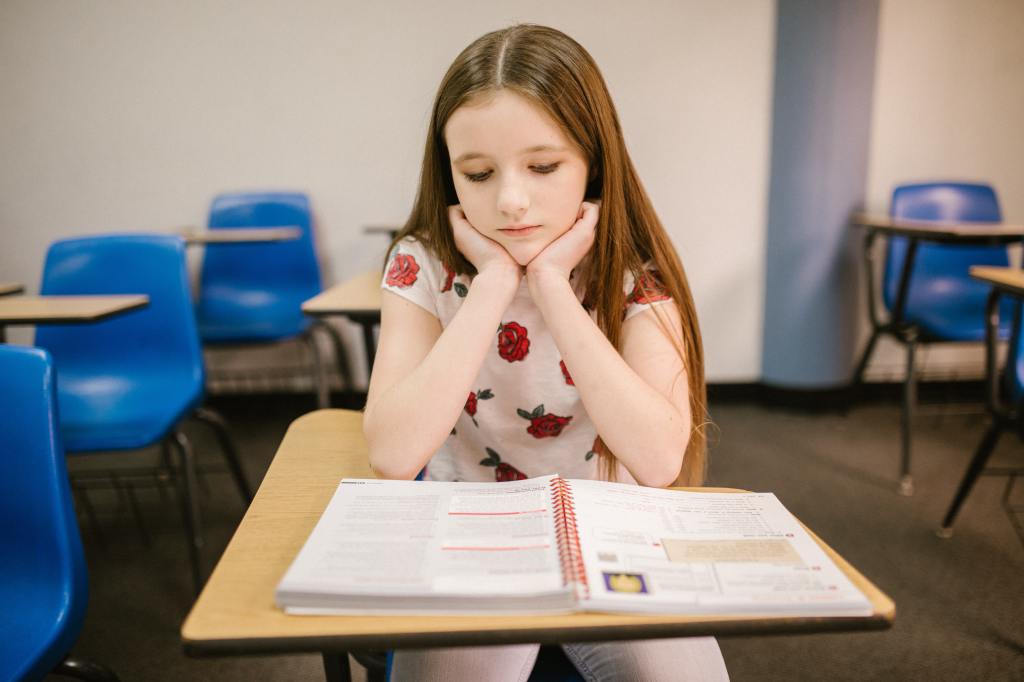
We can assist your child to catch-up with their schoolwork and overcome learning struggles
Ready to take learning to the next level?

We can extend your child’s learning by helping them to reach their full academic potential
Both Maths and English programs include:

Tutoring sessions designed to consolidate new learning and revision over subject concepts

Practice questions in between sessions (homework)

Regular written feedback to keep track of your child’s learning progress

English
We look at four learning areas in every session:
- Literature: Fiction and non-fiction texts, visual imagery including picture books, poetry and rhyme
- Reading fluency and comprehension: reading high-frequency sight words, reading and decoding unfamiliar words, literal meaning (answering reading questions by relying on the text) and inferred meaning (using own understanding to answer reading questions that are not found in the text)
- Writing: create imaginative, persuasive, and informative writing pieces, and self-edit
- Language: spelling, punctuation, and grammar
Maths
We look at these learning areas throughout our program:
- Number systems: place value, patterns, odd and even numbers, negative numbers, square numbers, prime numbers, and number planes
- Addition and subtraction: whole numbers and decimals, missing numbers, word problems, and order of operations
- Multiplication and division: whole numbers and decimals, word problems, and order of operations
- Fractions, decimals, and percentages: converting, adding, subtracting, multiplying, dividing, and rounding
- Data and chance: graphs, probability, surveys, and tables
- Measurement and geometry: length, area, capacity, volume, mass, time, 2-d and 3-d shapes, angles, and maps

How will the Session Look Like?
First 5 minutes
- Examine last week’s homework
- Set learning goals for every session
Next 45 minutes
- Undertake activities based on the session’s set goals
- Teacher aims to engage, explore, explain, and evaluate
- Student evaluates their learning and explains their thinking
Last 5 minutes
- Teacher helps student to reflect on what they have learned during the session
- Practice questions are set for homework
What happens after the session?
- Individual written feedback about the session is provided
 Neighbourhood Teacher